The Old Way to Discernment
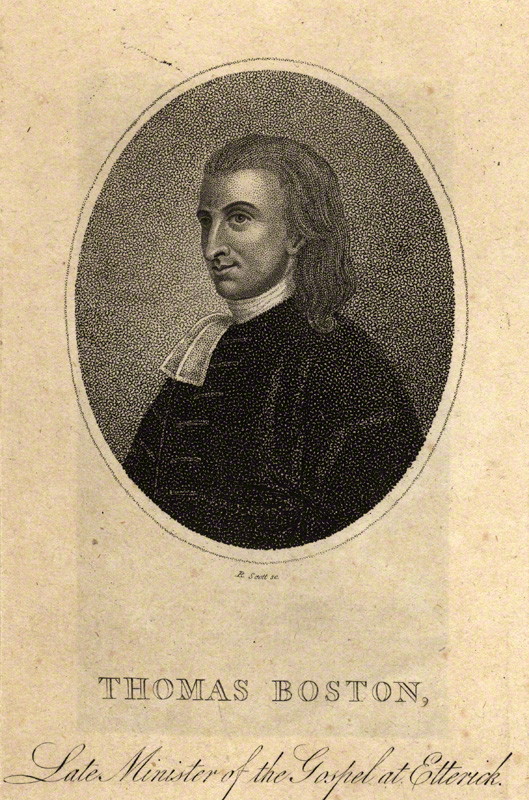
There is an old way to discern the true meaning of what is being taught as one reads the Scriptures. The following treatise from the pen of Thomas Boston (1676 - 1732) should be heeded as applicable, yet the principles contained herein are too often overlooked often to the detriment of many.
Some scriptures have only a simple sense, containing a declaration of one thing only; and that is either proper or figurative. A proper sense is that which arises from the words taken properly, and the figurative from the words taken figuratively. Some have a simple proper sense, as, 'God is a Spirit,' 'God created the heavens and the earth;' which are to be understood according to the propriety of the words. Some have a simple figurative sense, as, 'I am the true vine, and my Father is the husbandman. Every branch in me that beareth not fruit, he taketh away,' These have but one simple sense; but then it is the figurative, and is not to be understood according to the literal meaning of the words, as if Christ were a tree, Thus you see what the simple sense is. The compound or mixed sense is found wherein one thing is held forth as a type of the other; and so it consists of two parts, the one respecting the type, the other the antitype; which are not two senses, but two parts of that one and entire sense intended by the Holy Ghost: e.g. Moses lifted up the serpent in the wilderness, that those who were stung by the fiery serpents might look to it and be healed.
The full sense of which is, 'As Moses lifted up the serpent in the wilderness, that, even so must the Son of Man be lifted up; that whosoever believeth in him should not perish, but have eternal life.' Here is a literal and mystical sense, which make up one full sense betwixt them. Those scriptures that have this compound sense, are sometimes fulfilled properly (or literally, as it is taken in opposition to figuratively) in the type and antitype both; as Hos. 11:1. 'I have called my Son out of Egypt,' which was literally true both of Israel and Christ. Sometimes figuratively in the type, and properly in the antitype, as Psal. 69:21. 'They gave me vinegar to drink.' Sometimes properly in the type, and figuratively in the antitype, as Psal. 2:9. 'Thou shalt break them with a rod of iron.' Compare 2 Sam. 12:31. Sometimes figuratively in both, as Psal. 41:9, 'Yea, mine own familiar friend hath lifted up his heel against me; which is meant of Ahithophel and Judas. Now the sense of the scripture must be but one, and not manifold, that is, quite different and nowise subordinate one to another, because of the unity of truth, and because of the perspicuity of the scripture.
(2.) There are several approved examples of this, comparing one scripture with another, to find out the meaning of the Holy Ghost, as Acts 15:15. And to this agree the words of the prophet,' The Bereans are commended for this, Acts 17:11. Yea, Christ himself makes use of this to show the true sense of the scripture against the devil, Matt. 4:6. 'Cast thyself down,' said that wicked spirit; for it is written, He shall give his angels charge concerning thee,' ver. 7. 'It is written again,' says Christ, 'Thou shalt not tempt the Lord thy God.' And thus our Lord makes out the true sense of that scripture, that it is to be understood only with respect to them who do not cast themselves on a tempting of God.**

No comments:
Post a Comment